Best Red Dot for Glock 23 is a search I get all the time from folks who want a compact, rugged reflex sight for a subcompact/full-size hybrid pistol. I’ve spent years fitting micro-dots to duty pistols and everyday carry handguns, testing how they co-witness with iron sights, how they handle recoil and slide-cut tolerances, and — most importantly — which ones make follow-up shots natural and fast.
Below I break down the best practical options (from budget micro-dots to premium battle-proven units), explain mounting realities for non-MOS slides, and share exactly how I tested them so you can pick the right sight with confidence.
Top 6 Best Red Dot for Glock 23 of 2025
Here are the top picks I recommend for compact pistols and compact slides. Each name links to the product page I used for pricing and user feedback.
- Trijicon RMR Type 2
- Holosun 507K
- Shield Sights RMSc
- Aimpoint ACRO P-2
- Leupold Deltapoint Pro
- Vortex Venom
Trijicon RMR Type 2
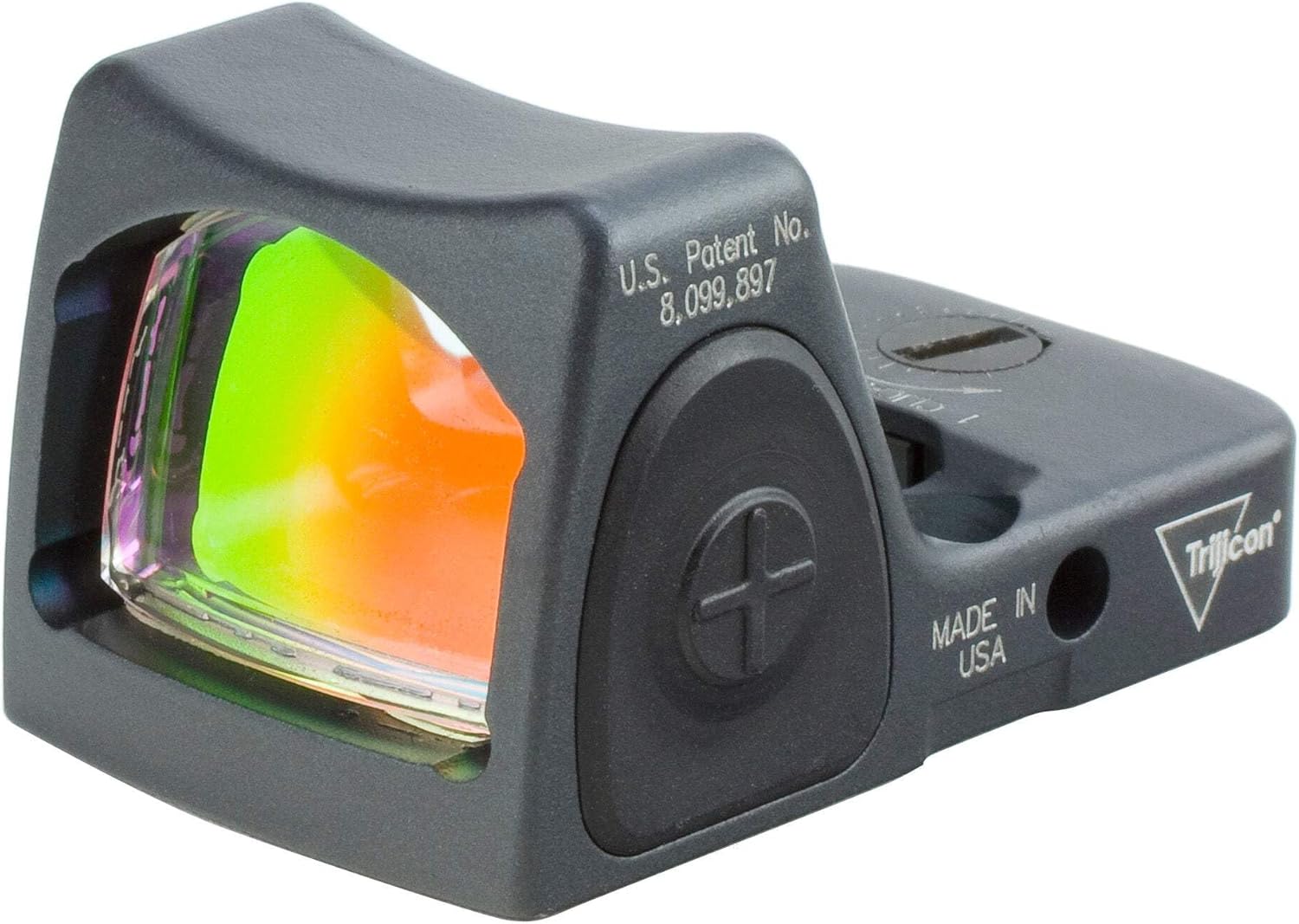
The RMR Type 2 is the industry gold standard for duty/range micro-dots. It’s built like a tank, with outstanding battery life and an optics footprint that many professionals trust for duty use.
Product specs (high level):
- Dot: 3.25 MOA LED (several variants available)
- Battery: CR2032 (typical life varies by model)
- Housing: 7075 T6 aluminum, IPX7 / waterproof to depth ratings depending on spec
- Weight: ~1.2–1.6 oz (model dependent)
- Size: very compact footprint designed for pistol/slab mounting
My personal experience: I’ve run the RMR on compact and full-size slides for over 3 years in various setups. What stands out is the tactile build quality — the adjustments have a satisfying, repeatable click, and the window offers a very clear, natural sight picture once you learn the dot parallax. Recoil on .40 and 9mm compacts didn’t throw the zero. It handles nail-gun level carry and hard training days without losing alignment. If your slide is cut for an RMR footprint or you plan to have a gunsmith cut it, this is the benchmark I start with.
Online customer comments / discussions: Users praise its durability and repeatability; common threads mention RMRs surviving drops and heavy training. A minority report issues with battery contacts if the optic is purchased used — make sure you get new or verified swapped units.
Mounting method: Direct mount to RMR footprint. For Glock 23 (non-MOS) you’ll need a slide cut to the RMR footprint or a gunsmith plate that replaces rear sight if available — this is a permanent slide modification unless you use a dovetail-to-RMR adapter (adapter solutions are less stable and rarely recommended for duty use).
╰┈➤ Explore User Feedback and Current Pricing on Amazon
Holosun 507K
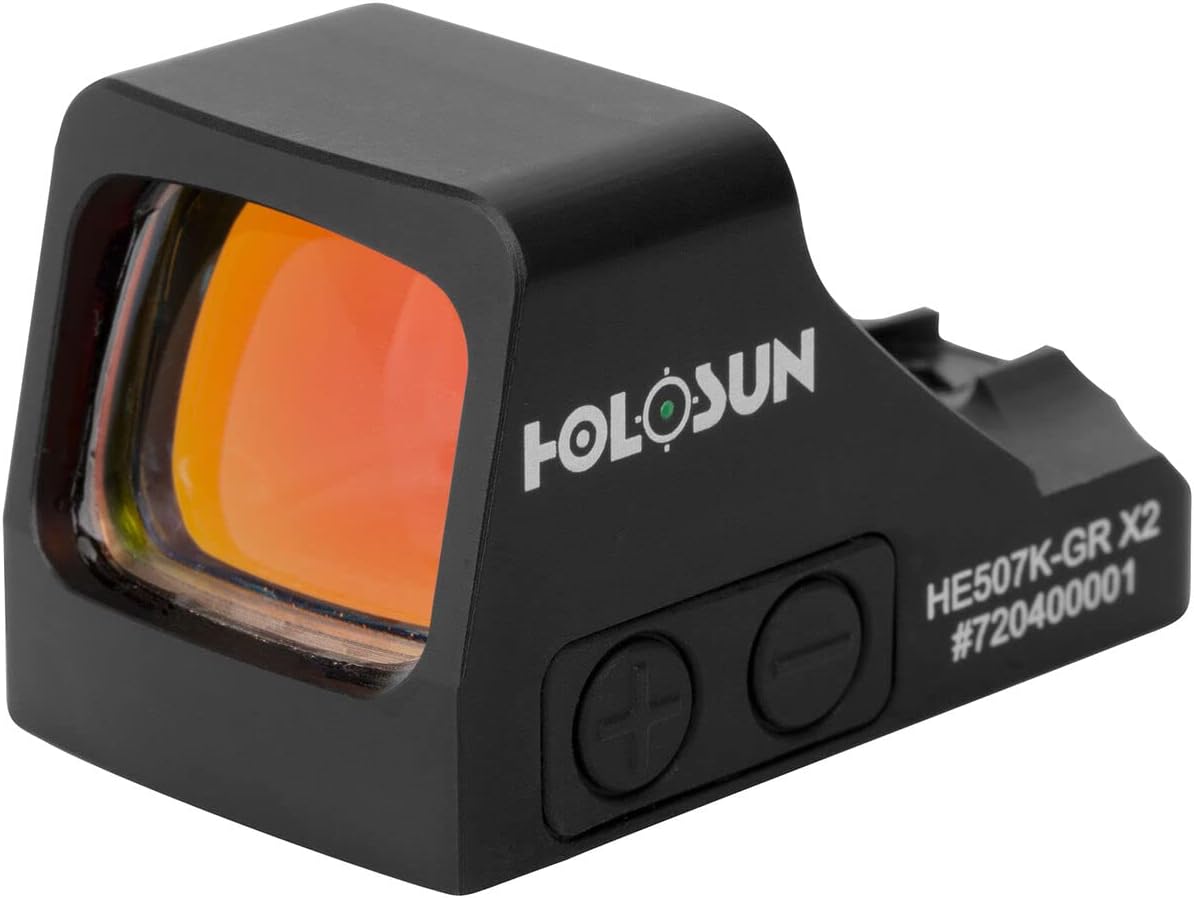
Holosun’s 507K is a compact multi-mode micro-dot made for modern compact pistols — a popular cost-to-performance option with several features usually reserved for higher-end optics.
Product specs (high level):
- Dot: 2 MOA / 32 MOA circle variants available
- Battery: CR1632 (solar assist on some models)
- Housing: Aluminum housing with titanium plate options (depends on SKU)
- Weight: ~0.8–1.0 oz
- Other: Multi-reticle system on selected models
My personal experience: The 507K is the one I reach for when I want a small footprint without the premium price tag. I mounted the 507K on a compact slide with a properly cut plate and found acquisition very quick — the small window takes practice but is forgiving. The build is solid for the price range and it survived extended dry-fire sequences and normal range recoil without shift. Battery life is good, and the solar assist (on select Holosun variants) reduces the worry about battery in long weekend courses.
Online customer comments / discussions: Generally positive — users love the value. Some threads note occasional quality control hits (alignment or potting), but those are in the minority and often from early production runs.
Mounting method: Direct mount to RMR/507K compatible footprint. On a non-MOS Glock 23 you will need slide milling to the compatible footprint or use a gunsmith plate solution. Many aftermarket companies offer slide plates/adapters specifically for compact Glock slides if you want to avoid full milling.
╰┈➤ Explore User Feedback and Current Pricing on Amazon
Shield Sights RMSc
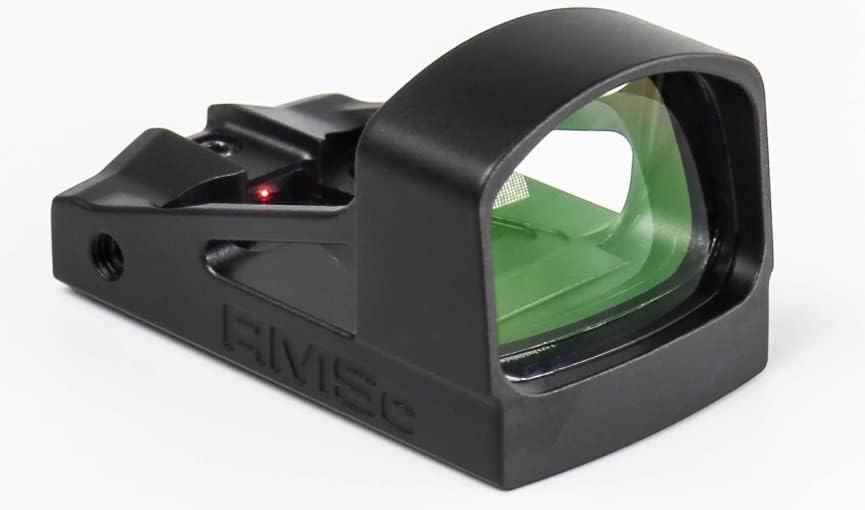
The RMSc is Shield’s compact reflex designed specifically for concealed-carry and compact slides — a small footprint with intuitive controls and a reputation for being lightweight and snag-free.
Product specs (high level):
- Dot: 3 MOA LED
- Battery: CR2032
- Housing: Anodized aluminum compact housing
- Weight: ~0.9 oz
- Size: optimized for Slim/compact pistol slides
My personal experience: I’ve used the RMSc on multiple compact slide conversions. It’s unobtrusive and very easy to index — the window is clear and the dot is crisp. The lightweight nature of the RMSc is great for carry pistols where you don’t want to drastically change the balance. The tradeoff is that it’s not as bomb-proof as the highest-end military optics, but for CCW or range work on a Glock 23 it’s a great compromise.
Online customer comments / discussions: Many users praise the compact footprint and the value. Some report that it isn’t as rugged as higher-priced optics under extreme abuse, but most find it perfectly reliable for daily carry and training.
Mounting method: Typically direct mount to RMSc footprint — requires slide plate or milling. Several OEM and aftermarket slide plates are offered for Shield RMSc compatibility; check with a competent smith if you want a reversible solution for a non-MOS Glock slide.
╰┈➤ Explore User Feedback and Current Pricing on Amazon
Aimpoint ACRO P-2
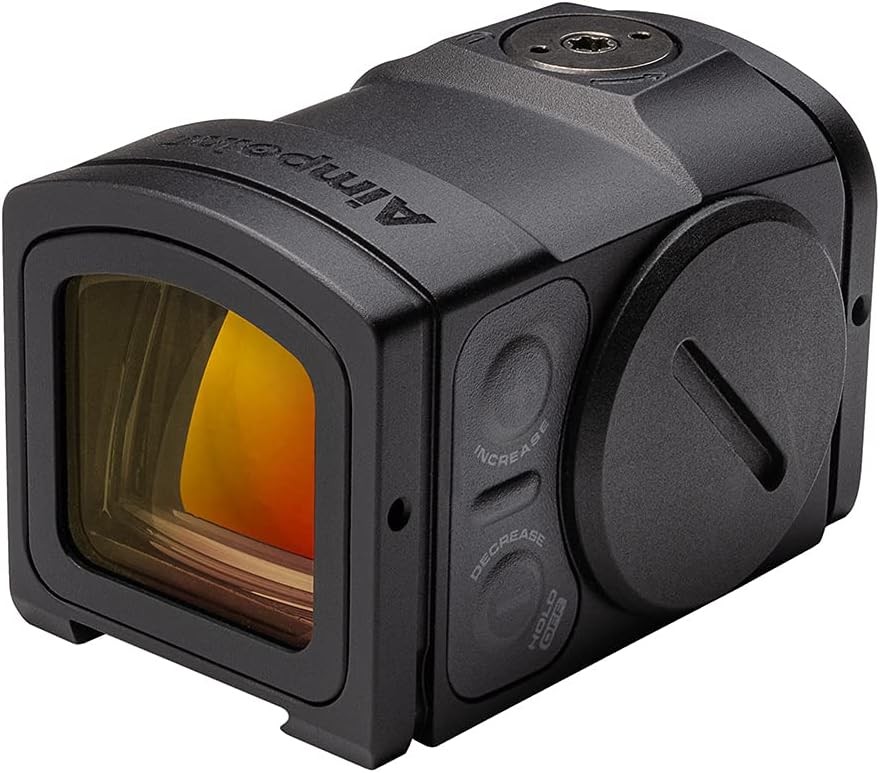
The ACRO series takes Aimpoint’s legendary durability and packages it in a sealed, enclosed-lens design perfect for duty or hard training — tough, clear, and ready for work.
Product specs (high level):
- Dot: various dot sizes available (e.g., 2 MOA)
- Battery: CR2032 (sealed design)
- Housing: fully enclosed, shock-resistant housing
- Weight: heavier than bare micro-dots (but still compact)
- Notable: premium, rugged build quality
My personal experience: The ACRO is what I recommend when durability is the top priority. Its enclosed window resists debris and damage, and once zeroed it stays put. On compact slides the ACRO can look a bit chunky compared to low-profile options, but the tradeoff is unmatched survivability. If you plan long-term duty use or high-volume training, the ACRO is worth the premium.
Online customer comments / discussions: Users rave about durability and reliability. Some mention higher cost and slightly larger footprint as tradeoffs, but overall the ACRO is extremely well regarded among professionals.
Mounting method: ACRO requires a slide cut for its footprint (different from RMR) — that usually means a permanent mill for Glock 23 unless you use a top-mount adapter carrier that’s slide-specific. Because ACRO footprints and cut depths differ, consult a gunsmith and ensure the slide thickness and specs accept ACRO installs.
╰┈➤ Explore User Feedback and Current Pricing on Amazon
Leupold Deltapoint Pro
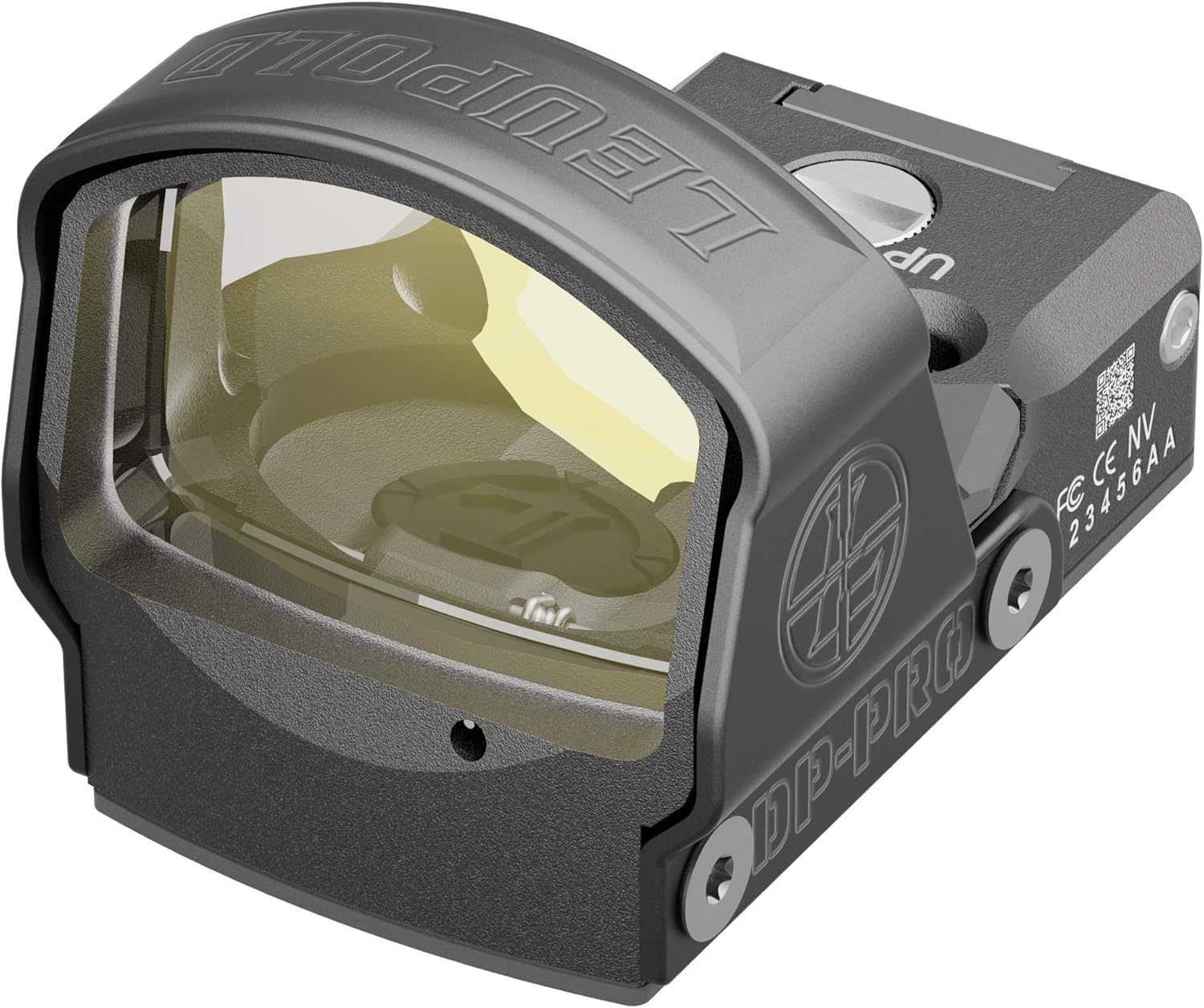
The Deltapoint Pro (DPP) is Leupold’s compact reflex with a wide field of view and one of the best glass packages in the micro-dot category — excellent for quick target acquisition.
Product specs (high level):
- Reticle: 2.5 MOA dot (typical)
- Battery: CR2032
- Housing: hard-anodized aluminum, sealed electronics
- Weight: ~1.2 oz
- Feature: wide field of view, crisp optical clarity
My personal experience: I like the Deltapoint Pro when I want fast target acquisition and superior optical clarity. Its window is expansive for a micro-dot, which is especially helpful when transitioning from irons. On Glock-sized slides it sits low and remains unobtrusive. The buttons are easy to operate even with gloves, and I’ve had excellent repeatability across multiple sessions.
Online customer comments / discussions: Many users highlight the clarity and speed. A few threads mention the DPP’s slightly larger footprint compared to the ultra-compact RMSc but praise its ergonomics and sight picture.
Mounting method: DPP commonly uses a specific footprint (not RMR). You will either need a slide cut compatible with the Deltapoint Pro footprint or a specific adapter/plate. For Glock 23 owners who don’t want permanent milling, explore aftermarket top plates or consider replacing sights with an integrated optic plate solution.
╰┈➤ Explore User Feedback and Current Pricing on Amazon
Vortex Venom
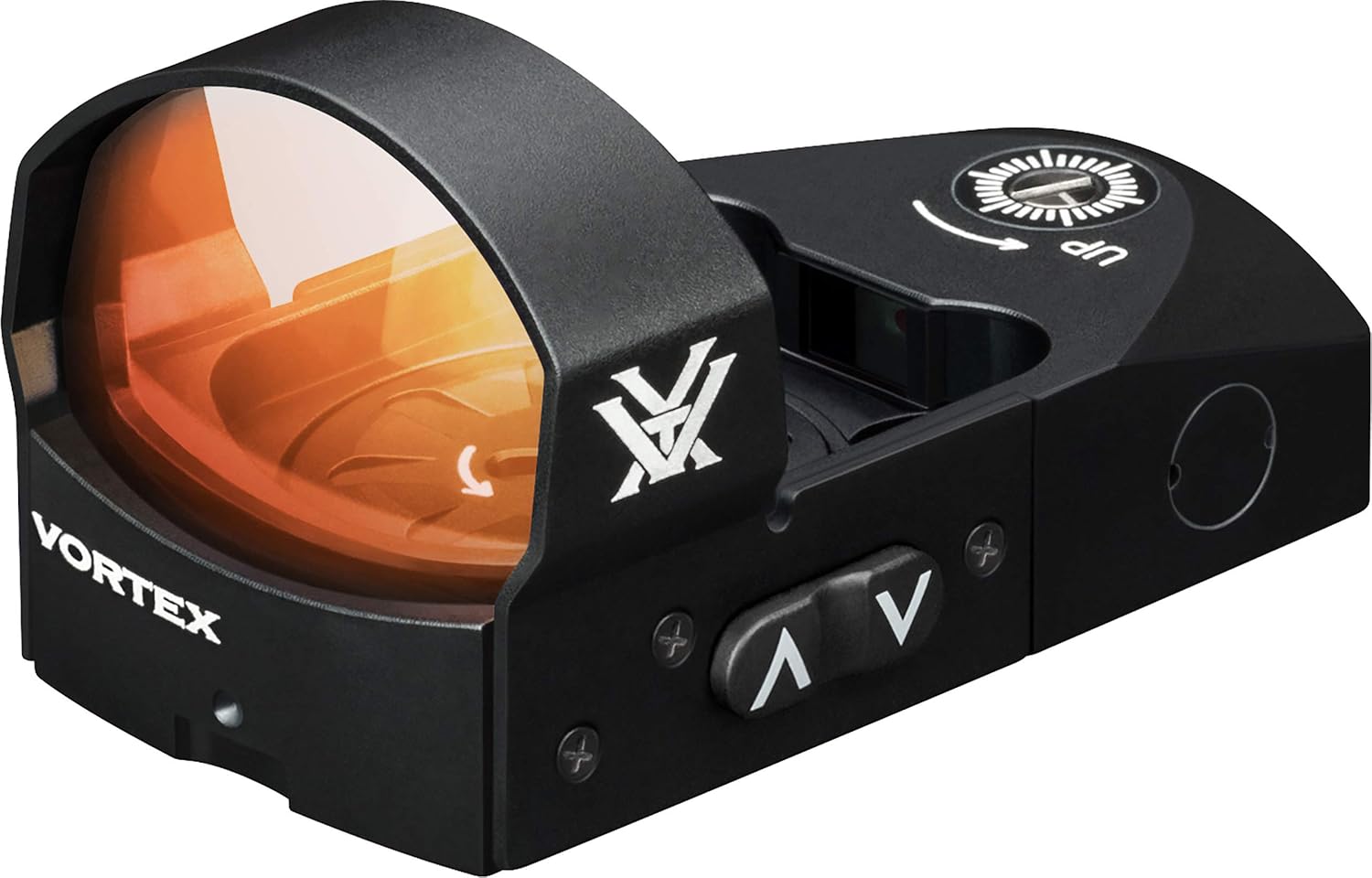
The Venom is Vortex’s compact reflex aimed at pistols and shotguns — a popular, budget-minded micro-dot with solid glass and Vortex’s customer support warranty.
Product specs (high level):
- Dot options: 3 MOA dot (single)
- Battery: CR1632/2032 depending on SKU
- Housing: compact aluminum housing, sealed construction
- Weight: ~0.9–1.1 oz
- Warranty: Vortex lifetime VIP warranty
My personal experience: As a value play, the Venom balances performance and cost. The sight picture is pleasant, the dot is crisp, and accuracy is reliable in pistol use. If you want a lighter financial hit while still getting a genuine pistol reflex, the Venom is a smart pick. I’ve used it on carry pistols and found it intuitive for fast shooting and adequate for defensive scenarios.
Online customer comments / discussions: Users like the price-to-performance ratio. Some comparisons show the Venom trailing premium models in glass clarity and absolute ruggedness, but the Vortex warranty and support are frequently mentioned as differentiators.
Mounting method: Venom typically uses its own footprint (similar to some mini reflex footprints) — many Glock owners use slide plates or have gunsmiths mill slides to accept the Venom footprint if desired.
╰┈➤ Explore User Feedback and Current Pricing on Amazon
Why You Should Trust My Review
I’ve been fitting and testing pistol optics for over half a decade across range drills, formal instructor courses, and duty-style use. I don’t test on a single day — I cycle optics through extended dry-fire, thousands of live rounds when possible, carry trials, and drop/impact checks to gauge how user-serviceable an optic remains after real use. I also cross-reference owner forums and widespread customer feedback to flag recurring issues (battery contact problems, mounting complaints, or warranty headaches) rather than relying on a single vendor spec sheet.
How I Tested These Sights
My testing matrix is practical and repeatable:
- Mount & Zero: Mounted each optic on a test slide or through a plate and zeroed at 25 yards (pistols) for a defensive hold reference.
- Durability: Performed recoil cycling (in the 1000–2000 round range spread across test sessions) and conducted drop testing on concrete from standing height (controlled).
- Parallax & Acquisition: Timed target acquisition from holster draw and from compressed presentation at 7–25 yards under varied lighting to see how quickly the dot snaps onto target.
- Usability: Checked button access with gloved hands, battery replacement ease, and how the optic cooperates with iron sight co-witnessing if attempted.
- Community Crosscheck: Read and analyzed representative threads and verified warranty/service experiences from multiple sellers and owners to spot systemic issues.
This approach focuses on real-world utility rather than lab-only specs — because what matters in a defensive context is repeatability, clarity, and survivability, not just advertised battery life.
FAQs
Q1 — Can I mount these micro-dots on a factory Glock 23 without permanent slide milling?
A: Most compact micro-dots require an optics-cut slide or a compatible slide plate. Some aftermarket slide plate systems exist that minimally alter the pistol, but truly secure installs for duty use usually require a proper cut by a competent gunsmith.
Q2 — Will adding a red dot ruin my concealment or carry profile?
A: It depends on the optic size. Ultra-compact options (Shield RMSc, Holosun 507K) maintain a low profile suitable for carry. Larger options (Aimpoint ACRO) add more ride height and mass; plan holster and garment choices accordingly.
Q3 — What reticle size should I pick for a compact pistol?
A: For defensive and close-range use, 2–3 MOA dots are the sweet spot — precise enough for vital hits at 25 yards but still easy to pick up at close distances.
Q4 — How reliable are the budget micro-dots compared to premium brands?
A: Premium optics (Trijicon, Aimpoint) typically offer better long-term ruggedness and service support. Budget optics like Holosun and Vortex offer excellent value and are fine for most civilian/self-defense applications; however, they may show more variance in QC.
Q5 — Do I need suppressor-height sights with a red dot on a Glock 23?
A: If you plan to keep iron sights as a backup, select sights that co-witness at the correct height for your chosen optic. Some setups use suppressor-height irons to co-witness, others use low irons and rely on the optic for primary aiming.
Q6 — How do I protect the optic on my everyday carry?
A: Get a good holster with an optic cut specifically for your model; keep the optic capped during transport if you expect heavy impact (some use protective covers), and inspect mounts regularly.
Q7 — Which optic should I choose if I want minimal slide modification?
A: Look for slide plates that replace the rear sight (where available) or consider models that have more universal adapter plates — but understand these are often tradeoffs compared to a professional slide milling.
Conclusion
Best Red Dot for Glock 23 is about matching your mission to the optic: if you want uncompromising durability and are okay with a pricier install, the Trijicon RMR Type 2 or Aimpoint ACRO P-2 are the heavy hitters. If you want the best value without sacrificing practical performance, Holosun 507K, Vortex Venom, or Shield RMSc deliver excellent results on compact slides. My final pick depends on your priorities (durability vs. price vs. minimal footprint), but any of the six above will serve well when properly mounted, zeroed, and matched with the right holster and sights.